
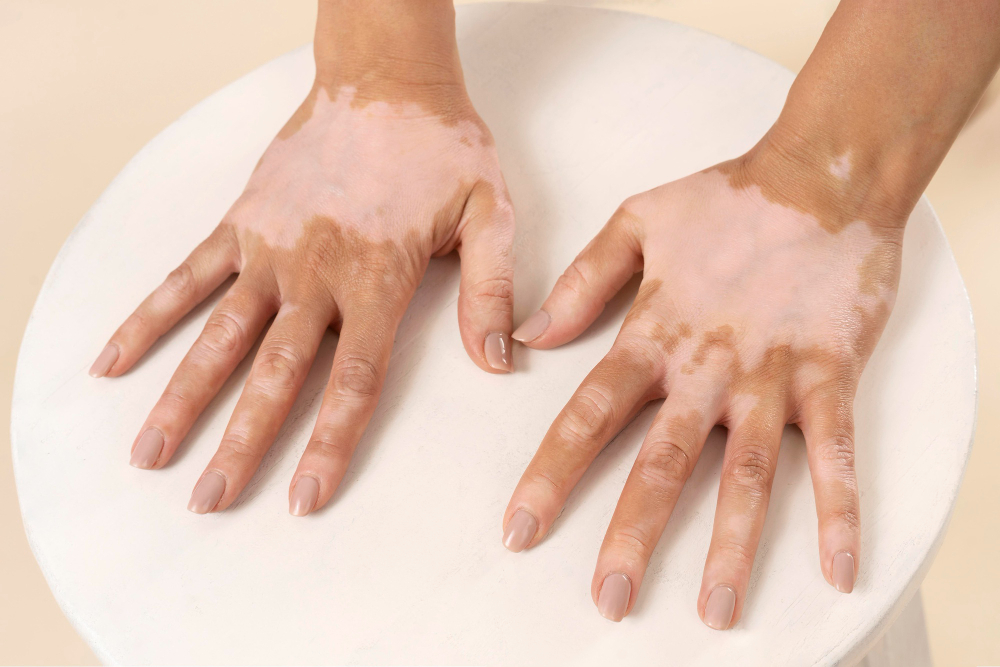
What is Vitiligo?
Vitiligo is a skin condition that causes patches of skin to lose their color. These patches can appear anywhere on the body. Often, the change in skin color happens when cells that make pigment stop working. Because of this, the skin develops light or white spots. Vitiligo affects people of all ages and skin types. However, it may be more noticeable in people with darker skin. Understanding the types of vitiligo can help you recognize and manage this condition.
Common Symptoms of Vitiligo
Vitiligo symptoms can vary from person to person. Still, some signs are common. For example, you may notice:
Usually, these patches do not cause pain or discomfort. Yet, they can affect how a person feels about their appearance.
Main Types of Vitiligo
There are several types of vitiligo. Each type affects the skin in a different way. Knowing the types of vitiligo can help you understand your condition better. The main types include:
Causes and Risk Factors
Doctors do not know the exact cause of vitiligo. However, several factors may play a role. For example, vitiligo may happen when the immune system attacks pigment cells by mistake. This is called an autoimmune response. Other possible causes include:
Although anyone can get vitiligo, it may be more likely if you have a close relative with the condition.
How Vitiligo is Diagnosed
If you notice white patches on your skin, a doctor can help. Usually, diagnosis starts with a physical exam. The doctor may ask about your health history and family background. Sometimes, a special lamp called a Wood’s lamp helps show the patches more clearly. In some cases, the doctor may take a small skin sample for testing. Blood tests may also check for other health problems. Early diagnosis helps you learn about vitiligo treatment options sooner.
Treatment Options
While there is no cure for vitiligo, several treatments can help. Treatment choices depend on the type and size of patches. Some common vitiligo treatment options include:
Because each person is different, your doctor will suggest the best plan for you.
Living with Vitiligo: Tips and Support
Living with vitiligo can be challenging. However, many people find ways to cope and thrive. Here are some helpful tips:
Remember, you are not alone. Many people live full, happy lives with vitiligo.
Prevention and Myths
Currently, there is no sure way to prevent vitiligo. Still, you can protect your skin and manage symptoms. Some people believe myths about vitiligo. For example, vitiligo is not caused by eating certain foods. It is not contagious, so you cannot catch it from someone else. Understanding the facts can help reduce fear and stigma.
If you notice changes in your skin, consult Dr. Manthan Jhad for personalized advice.